
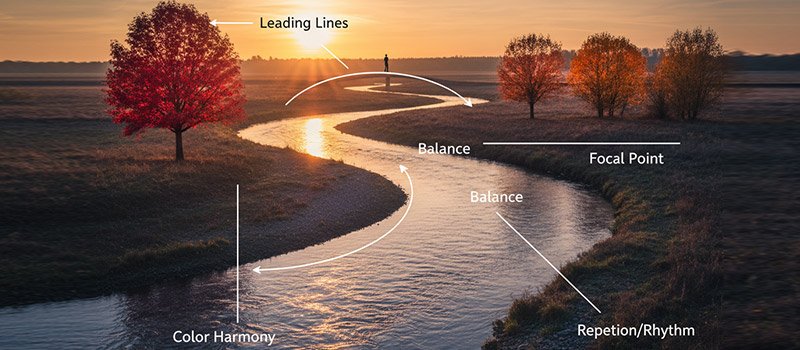
Being a professional photographer doesn’t mean you must have expensive photography equipment. Understanding the principles of design in Photography is more important than having the latest equipment. Without understanding design, your photos will look dull.
Design principle is like seeing the object as an artist. There are some visual rules that guide how you can arrange elements in a frame. After getting it right, every photo feels balanced, engaging, and meaningful. Deep Etch Service is here to help you develop your skill by understanding those guidelines.
What Are the Principles of Design in Photography?
The principles of design are a specific set of rules to capture better photos. They control how to showcase the object from the viewer’s perspective. Those principles are based on what viewers notice and how they emotionally connect with the photo.
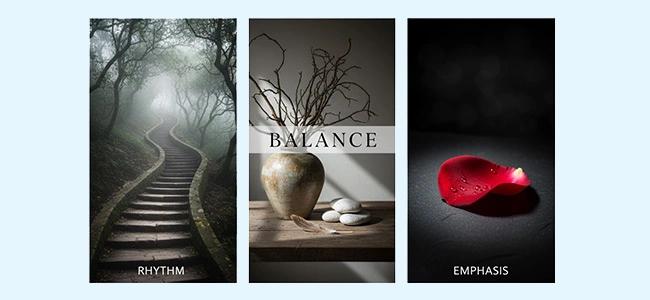
In professional photography, those principles of design are Balance, Contrast, Emphasis, Movement, Pattern, Unity, and Variety. Each of those guidelines is important to take a perfect shot. Professional photographers combine those 7 principles of design to capture attractive photos.
7 Principles of Design in Photography
- Balance
- Contrast
- Emphasis
- Movement
- Pattern
- Unity
- Varity
1. Balance
Balance is the foundation of an image. It is the rule of keeping your frame steady. It distributes visual weight within the frame. A photo feels comfortable when no single area feels heavier than the rest. In photography, there are two types of balance. The first one is Symmetrical balance.
It means balancing both sides of the image so that they mirror each other. Another one is Asymmetrical balance. It shows elements that are different on each side. In product photography, balance helps to create professional images that feel natural to look at. This is a must for e-commerce and advertising.
2. Contrast
Contrast is the method of highlighting your subject. We know that Deep Etching Service is used for separating the object from its background. Contrast is used to highlight the object to bring attention. It’s the difference between light and dark. You can also bring the difference using sharp-soft, warm-cool, and even-rough.

When you learn to use the contrast effectively, you can easily guide the viewer’s attention to your main subject. If you place a red color product on a red background, it confuses the viewers about where to focus. Using the contract principle, you can create a difference. A high-contrast photo feels bold.
3. Emphasis
Emphasis is the technique of guiding the viewer’s attention. Every strong photo needs a clear focus point. That should instantly grab attention. That’s the role of emphasis. How can you create Emphasis? Well, you can create emphasis through focus, lighting, colour, and composition.
Sometimes you can blur the background while keeping your product sharp. It ensures that customers notice the product at first glance. You can control exactly what you want them to look at. It’s like giving your audience a visual map. Emphasis can control showing them where to look first.
4. Movement
According to the name, it’s the principle of guiding the eye through the frame. People often misjudge it with motion. Movement in photography isn’t limited to motion. It’s about how the eye travels across your image. Lines, curves, shadows, and shapes can control the viewer’s eye in a certain direction.
Diagonal lines add energy and flow. Gentle curves create elegance. In fashion photography, movement adds a realistic vibe. In product photography, it can guide the viewer toward the key detail. To become a professional photographer, you must understand how to utilize the movement.
5. Pattern
Professional photographers always follow a specific pattern to maintain consistency in their images. Give them an old version of a camera. They will still capture better photos. That’s the magic of pattern. They create visual harmony using patterns. You can notice patterns almost everywhere.
It gives rhythm to an image. It makes the image pleasant to see. Patterns help to keep photos simple but powerful. In product photography, you can use patterns in optional images. You can keep something in the background to get the most benefit of the pattern.
6. Unity
Making everything connected within the frame is called unity. This is an important part of the principles of design in Photography. Every element means colors, lighting, subject, and background. They all need to work together without creating distractions. A well-composed lifestyle photo is the perfect example of unity.
You can use consistent tones that reflect a single mood. You have to follow the brand identity to ensure that. If unity is missing, a photo looks extremely unprofessional. This is also important for group product photos. You should practice capturing with multiple objects to learn unity.
7. Variety
Variety is the opposite of unity. It makes the image interesting by creating differences within the image. Variety adds surprise to the image to prevent your images from feeling repetitive. How can you create variety within the image without creating distractions?
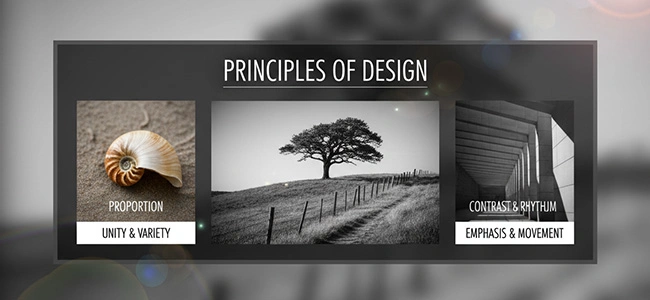
Different angles, shapes, colors, and textures are some effective ways to create variety. Just make sure that you don’t overdo it. The ultimate goal should be balance. Professional photographers blend unity and variety skillfully. It gives each photo a sense of originality.
Applying Design Principles in Product Photography
In e-commerce and commercial photography, design principles are the most powerful option to stay ahead of others. Using the design principles, you can showcase products clearly. Your product photo will be visually appealing. Make sure that you maintain the Balance across the images.
You should place the object and props without damaging the overall vibe. Keep an eye on the contrast. You should highlight textures and materials. If there is any special feature, use the emphasis to direct attention to key features. Finally, you should maintain unity to ensure all images match your brand tone.
Wrap Up
Have you understood the principles of design in Photography? This is the only way to make your photography meaningful. It can separate amateurs from professional photographers. We all know that photography is visual storytelling.
Those design principles allow you to tell the story in a better way through photography. When you are shooting products for Australian brands, you need to make adjustments in the post-processing, also. Deep Etching Service is always available to help Aussie photographers.
FAQ’s
What is the difference between balance and contrast in photography?
Balance is the process of keeping the photo visually stable. Contrast focuses on creating differences within the image. You can create differences using light, colors, and sharpness.
How can I use rhythm in my photography?
Rhythm is another form of repetition. You can use patterns, shapes, and colors to bring rhythm. You can break the rhythm with one different element to create interest.
What is unity in photography composition?
Unity means all competent members of your photo work together. Your colours, lighting, and composition match the same mood. It makes the photo complete.